FromNOWYour classroom
To2045Cần Thơ, Vietnam
- Engine
- Tide
- Roles
- 5
- Subjects
- Science, Math, Civics, Geography
- Portal
- PT-01
- Coordinates
- 10.03°N 105.78°E
Platform
5 products, one loop: students visit a future inside a Portal, solve what they find there, and the best answers ship to real streets through the Problems Bank.
FromNOWYour classroom
To2045Cần Thơ, Vietnam
01Portals
AI-generated, science-grounded future worlds. Students take roles, AI citizens react to every decision, and our simulation engine, Tide, plays out the consequences years ahead. Each Portal maps to the curriculum teachers already have to teach.
Roles with real trade-offs: engineer, farmer, mayor, nurse, reporter
AI citizens who remember what you promised them
Tide simulates flooding, heat, budgets, and public trust over decades
Mapped to math, science, civics, ethics, and language

2045
PT-01Cần Thơ, Vietnam
High tides now reach the floating market twice a week, saltwater has crept forty kilometres up the river, and the rice harvest is half what it was. The city has one budget and three plans on the table. Students decide what gets built, what gets moved, and who gets a say — then Tide shows them the delta twenty years on.
2050
PT-02North Jakarta, Indonesia
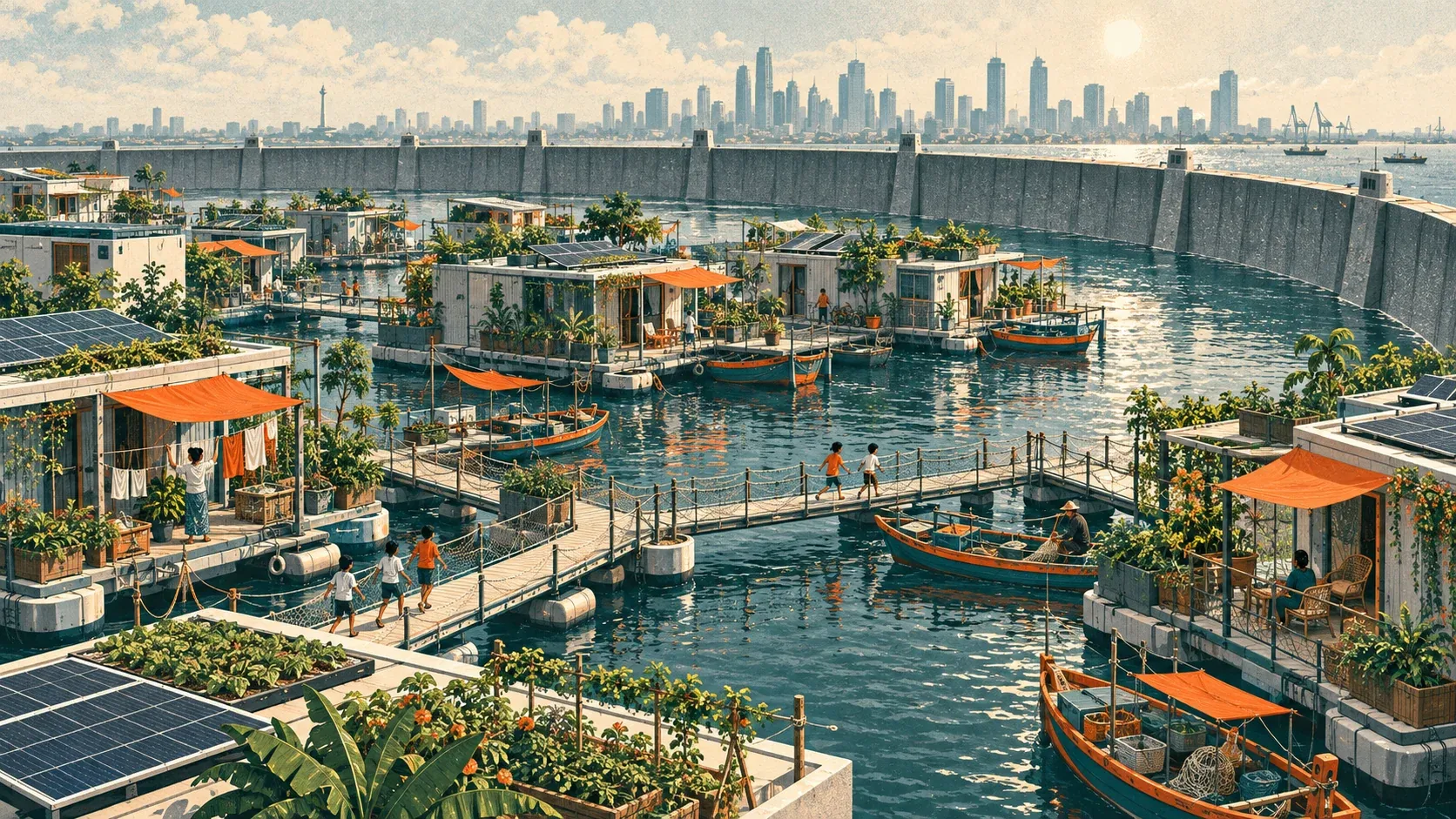
The northern coast sinks a few centimetres every year and the sea wall is due for its next raise. Students run a coastal neighborhood that must choose between building higher walls, lifting homes onto floating platforms, or moving inland — and keep the fishing economy, the schools, and the mosque together through the choice.
2040
PT-03Manila, Philippines
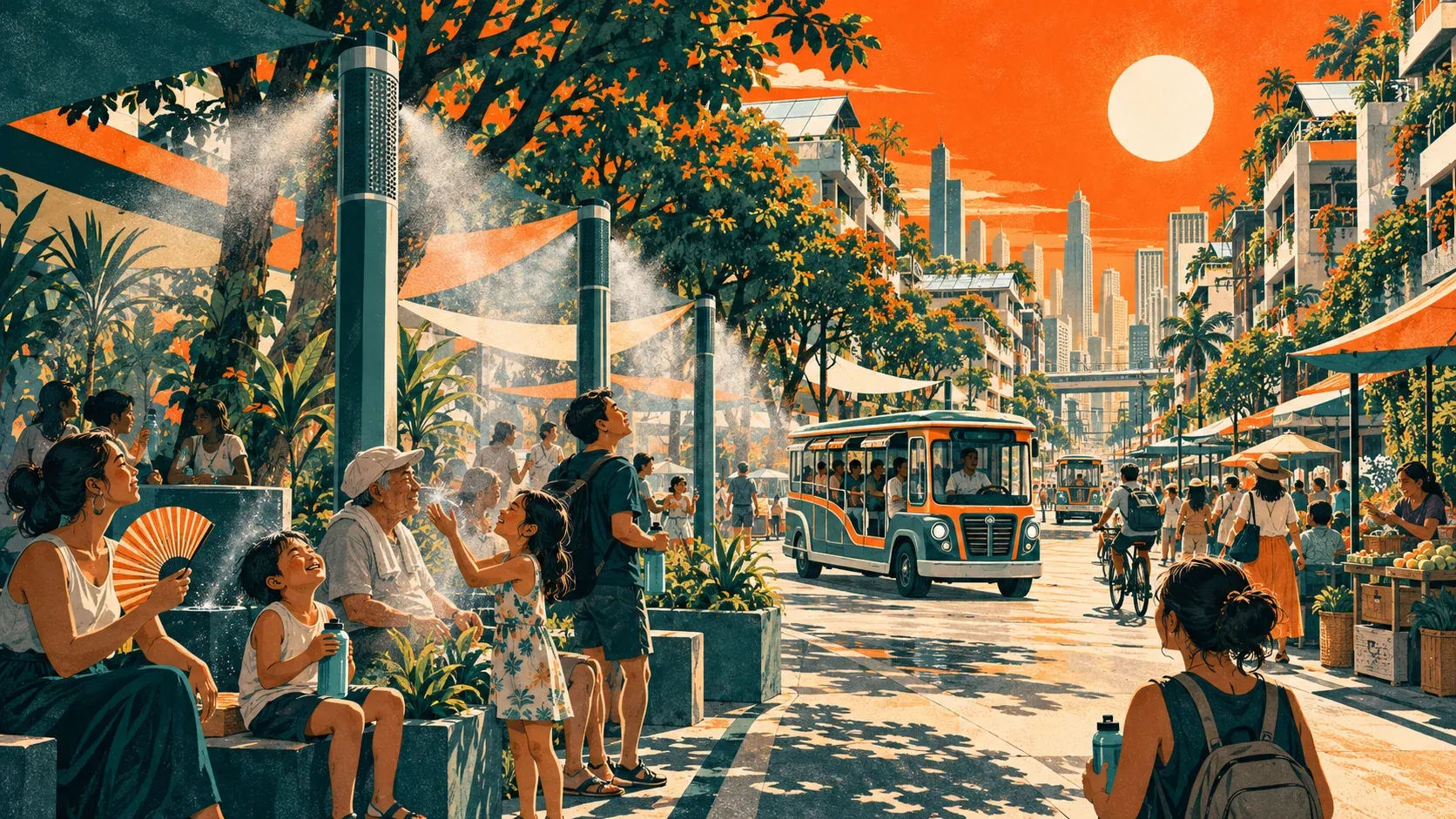
Heat-index days above 45°C now close schools for weeks at a time and the power grid buckles every afternoon. Students redesign a dense barangay for the heat: shade, water, cooling centers, work hours, and school calendars — with a city budget that cannot pay for everything and residents who disagree about what matters most.
2038
PT-04Ho Chi Minh City, Vietnam
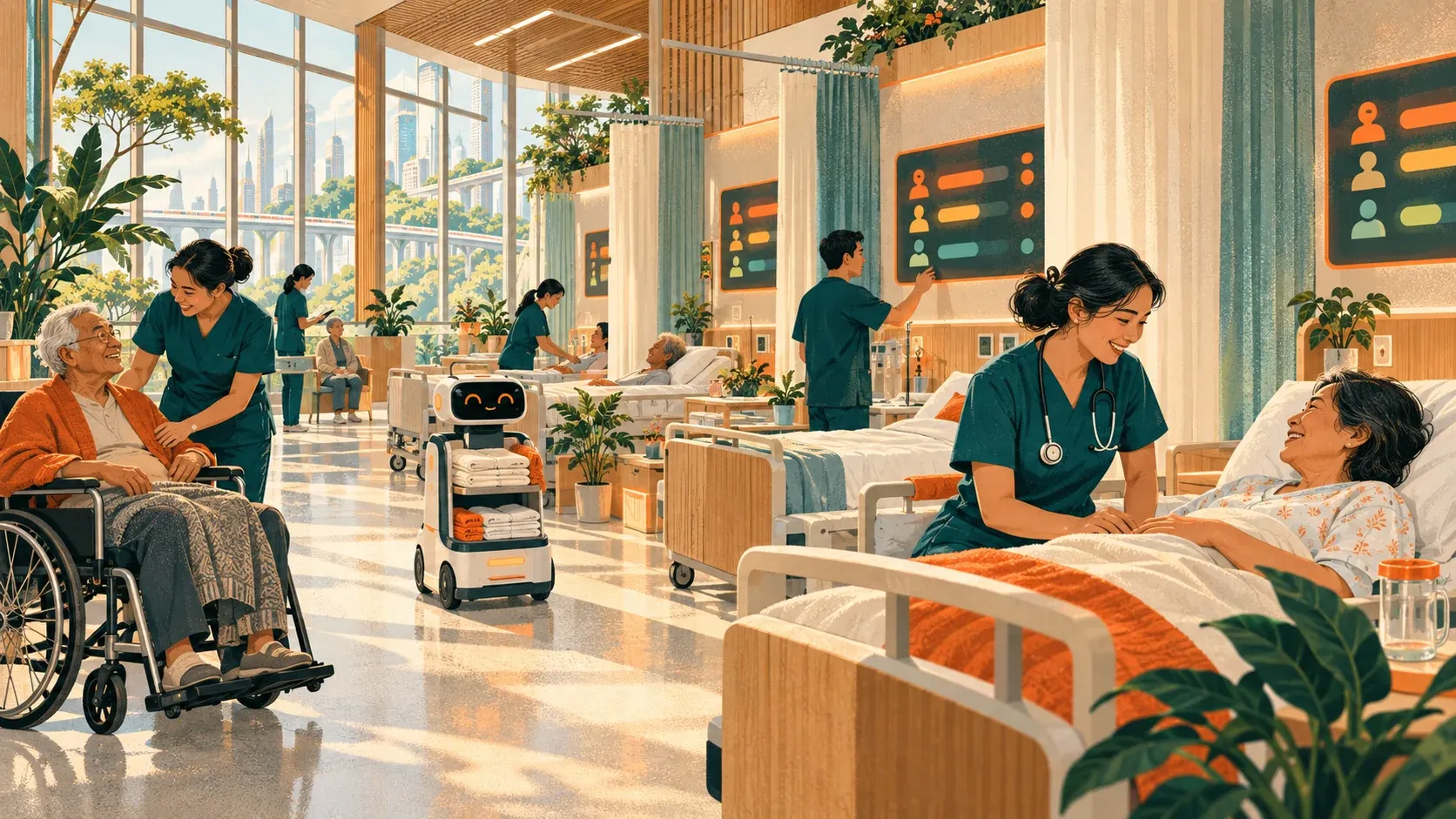
A district hospital has handed triage, scheduling, and diagnosis support to an AI system. Waiting times have collapsed — and so has trust, after one decision nobody can explain. Students sit on the hospital’s ethics board and decide what the AI may decide alone, what a human must sign, and how patients get to appeal.
2058
PT-05Shackleton Crater rim, the Moon
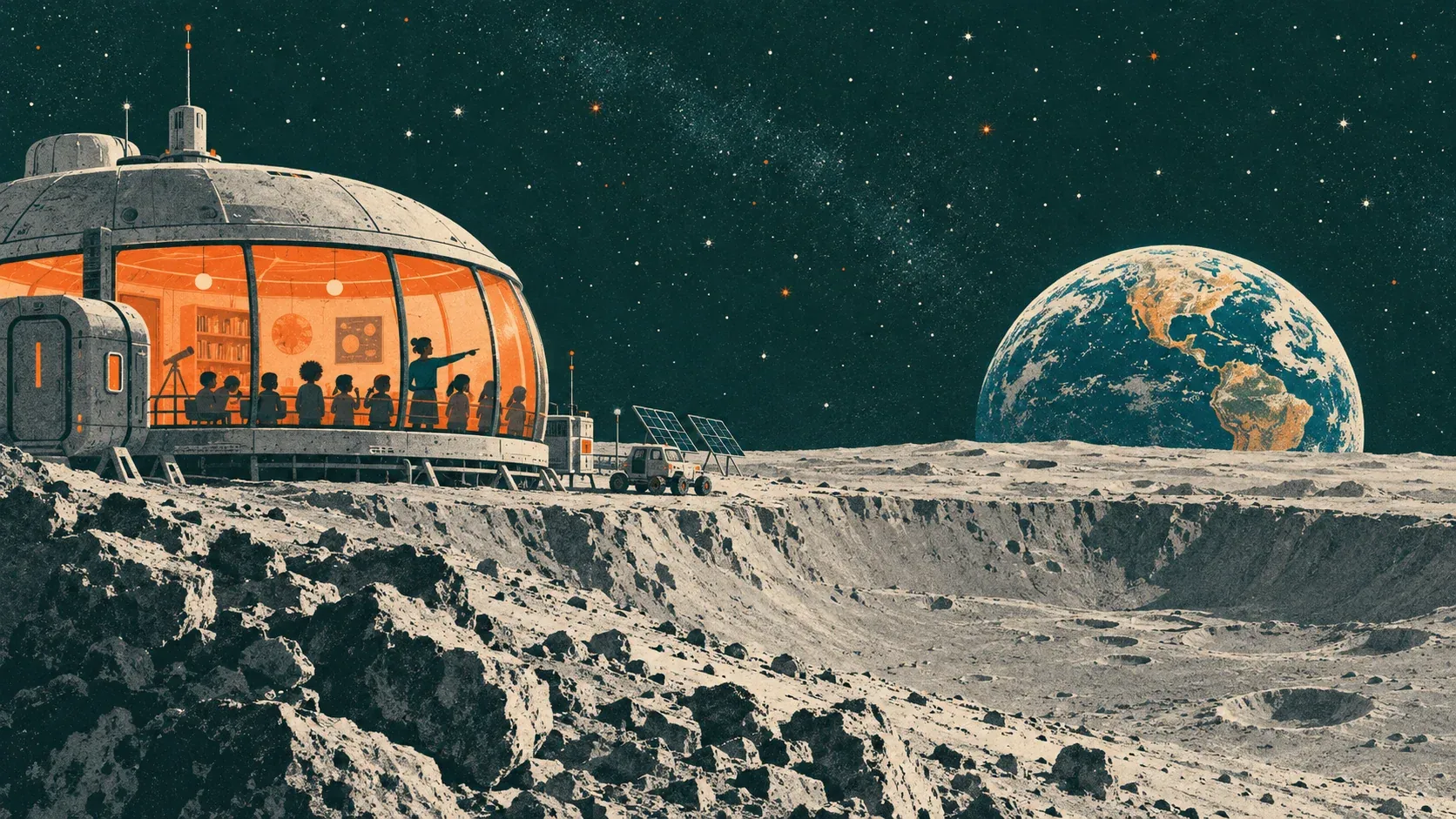
Twelve families have moved to a research base at the lunar south pole, and their children need a school. Students design it from nothing: what to teach when Earth is three days away, how to ration water and power between classrooms and labs, and which traditions from home are worth the cargo weight.
02Future Self
A guided conversation with a projection of yourself at 30, shaped by the choices you made inside Portals. Built for motivation and career exploration, with strict child-safety guardrails on every turn.
Grounded in the student’s own Portal choices, not a horoscope
Career paths explained in plain language, with the trade-offs left in
Conversation scope limited and reviewed by our Trust & Safety team
Teachers and parents see summaries, never private transcripts
03Future Passport
A verifiable record of the skills a student earns across Portals: systems thinking, collaboration, data reasoning, and ethics. Universities and employers read it through the Passport API, only with the student’s consent.
Skills stamped from evidence, not self-reported
Systems thinking, collaboration, data reasoning, ethics
Student-owned and consent-based: nothing is shared by default
Passport API for universities and employers
04Problems Bank
Cities, NGOs, and companies post problems they have not solved. We turn each one into a Portal, thousands of students work on it, and the top solutions get funded pilots in the real world.
Partners post a problem, a budget, and a pilot site
WTF builds the Portal and runs it across partner schools
Students pitch; a joint panel picks what gets piloted
Results are measured and published, including the failures
05Portal Studio
Students and teachers build and publish their own future worlds with the same tools our world-builders use: maps, roles, AI citizens, and Tide rules.
Portal Studio · Beta 2026
Templates for cities, coastlines, hospitals, and schools
Science-check review before a world is published
Classroom-only, school-wide, or public publishing
06Safety principles
Every Portal, AI citizen, and Future Self conversation runs under the same rules. The 9 students on our Council of 2045 can veto any feature that touches minors’ data.
Any feature that touches minors’ data needs a yes from the Council of 2045. Their veto is binding.
We collect only what a Portal needs to run and a teacher needs to teach. We never sell student data and never use it for advertising.
Every AI citizen and every Future Self conversation runs inside reviewed guardrails, with red-teaming before release and monitoring after.
Portals can be dark — floods, heat, illness — but they are age-banded, never graphic, and always end with something a student can do.
Signs of distress in a conversation route to a trained human and the student’s school, not to another model.
FAQ
Still curious? Write to partners@wherethefuture.org.
WhereTheFuture lets students visit the future before they live in it — then ship real fixes back to the present. Students enter Portals — science-grounded simulations of real places in the future — take on real roles, and see the consequences of their decisions. The best student solutions become funded pilots in real cities through our Problems Bank.
Portals are built for students aged 11 to 18, in lower- and upper-secondary school. Content is age-banded: younger students get shorter sessions and gentler themes, and Future Self conversations are only available from age 13 with school and parent consent.
Safety is the floor, not the feature. Every AI citizen and Future Self conversation runs inside reviewed guardrails, signs of distress are escalated to a trained person and the student’s school, and any feature that touches minors’ data needs approval from the 9 students on our Council of 2045, who hold a binding veto.
We collect only what a Portal needs to run and a teacher needs to teach. We never sell student data or use it for advertising. Future Passport records belong to the student, and universities or employers can read them only with the student’s consent.
Schools and education departments pay an annual per-student license. Families can subscribe to the Explorer home plan. Partner Portals are sponsored by cities, NGOs, and companies, and universities and employers pay to read verified skills through the Passport API. Students never pay to have their solution piloted.
A partner posts a real problem to the Problems Bank. We build a Portal around it and run it across partner schools. Students pitch their solutions to a joint panel of the partner, teachers, and our team; the strongest get a pilot budget and a real site. We measure the result and publish it — 37 student solutions have been piloted so far.
We work with 140 partner schools in 14 provinces and cities across Vietnam, with pilots in Indonesia and the Philippines.
Schools can start with a free Portal day for one class. Cities, NGOs, and companies can bring a problem to the Problems Bank. Write to partners@wherethefuture.org or use the form on our partner page, and we will reply within two working days.
In October 2022, after floods closed her school in Cần Thơ, a 13-year-old student typed “where the future?” into the class chat. She meant: where is our future if the city keeps flooding? Students started calling the project WTF, and we kept the typo. Grammar mistakes are allowed; giving up on the future is not.
It plays like one, on purpose. But every Portal is reviewed by scientists and teachers, mapped to the curriculum, and assessed on reasoning rather than points. There is no single winning ending — every future is plural.
Book a Portal
Schools start with a free Portal day for one class. Cities and NGOs start with a problem.